The Role of Sustainable IT Practices in Reducing Tech Costs and E-Waste
Today, where technology drives nearly every aspect of business, being smart with IT resources is more than just tech; it’s a financial and environmental necessity. As a result, more companies are realizing that sustainable IT practices help them stay lean financially while being more responsible with electronic waste (e-waste). By adopting these practices, businesses can extend the lifecycle of their devices, lower energy consumption, and contribute to a healthier planet.
What Are Sustainable IT Practices?
Sustainable IT practices refer to strategies and methods that reduce the environmental impact of technology while optimizing its performance. This includes hardware management, energy-efficient operations, responsible procurement, and proper recycling methods. Sustainable IT focuses not only on reducing waste but also on improving cost efficiency across the organization.
These practices cover a wide spectrum, from choosing energy-efficient servers to implementing virtualization, cloud computing, and paperless processes. Organizations that prioritize sustainability in IT often see both ecological and financial benefits.
How Sustainable IT Practices Reduce Tech Costs
One of the most tangible benefits of sustainable IT practices is cost reduction. Many businesses underestimate how much they can save by integrating eco-friendly technology strategies.
1. Energy-Efficient Hardware
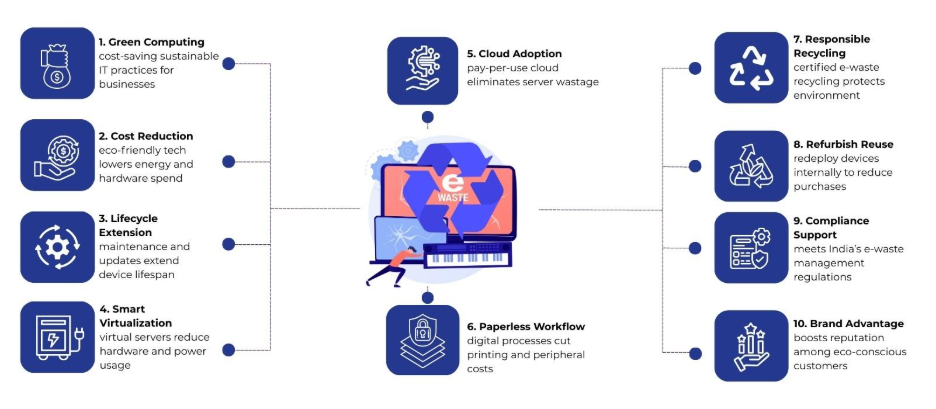
Switching to energy-efficient devices can significantly cut electricity bills. For example, Energy Star-certified equipment consumes up to 30% less power than standard devices. Over time, this reduction in energy consumption translates into substantial savings, especially for organizations with large data centers.
2. Virtualization and Cloud Computing
You can run multiple virtual servers on a single physical machine through virtualization. This lowers not only power consumption but also maintenance costs. Similarly, cloud computing helps businesses trim down by letting them pay for just what’s used, rather than buying and powering a room full of servers. Sectors like banking and e-commerce adopt it for agile development, DevOps, and hybrid/cloud infrastructures.
3. Extending Hardware Lifespan
Sustainable IT practices promote regular maintenance, software updates, and optimized usage of existing hardware. By extending the life of devices, businesses can reduce the frequency of new purchases. This practice not only cuts costs but also decreases the volume of e-waste generated.
4. Efficient IT Procurement
Organizations that adopt sustainable IT practices often select devices based on lifecycle and energy consumption rather than solely on initial cost. Prioritizing durable and energy-efficient equipment may have a slightly higher upfront cost but results in lower long-term operational expenses.
5. Reducing Paper and Peripheral Costs
Sustainable IT practices also include digitalization of documents, collaboration tools, and electronic workflows. By minimizing paper use and reliance on additional peripherals, companies can achieve cost savings while supporting environmental responsibility.
The Environmental Impact of E-Waste
E-waste is one of the fastest-growing waste streams globally. Tossing gadgets in the trash can release dangerous chemicals like lead and cadmium, which end up poisoning our soil and water supply. However, organizations can reduce e-waste in several ways by adopting sustainable IT practices:
- Device Refurbishment and Reuse: Functional devices can be refurbished and redeployed within the organization or donated to charities.
- Responsible Recycling: Partnering with certified e-waste recycling companies guarantees that components are processed safely and valuable materials are recovered.
- Reduction in Single-Use Electronics: Avoiding unnecessary upgrades or replacements reduces the total number of devices entering the waste stream.
These steps not only decrease the environmental footprint of businesses but also enhance their reputation as socially responsible entities.
Implementing Sustainable IT Practices in the Workplace
Transitioning to sustainable IT practices requires a strategic approach. Here are some actionable steps organizations can take:
1. Conduct an IT Audit
Assess current hardware and software usage to identify inefficiencies and areas for improvement. This can include tracking energy consumption, device utilization rates, and software licensing.
2. Adopt Cloud Services
Cloud solutions help organizations scale resources up or down based on demand, which reduces unnecessary hardware expenditure and energy consumption.
3. Establish a Device Lifecycle Policy
Define clear guidelines for device procurement, maintenance, usage, and disposal. Incorporating refurbishment and recycling steps can extend device lifespan and lower e-waste.
4. Educate Employees
Employee behavior impacts IT sustainability. Therefore, encourage energy-saving practices, proper device handling, and digital-first workflows to maximize the benefits of sustainable IT practices.
Financial and Strategic Benefits Beyond Cost Savings
While the direct financial benefits of sustainable IT practices are clear, there are additional advantages that support long-term business strategy.
- Regulatory Compliance: India follows a uniform national framework under the E-Waste (Management) Rules, 2022 (effective from April 1, 2023). However, enforcement appears more rigorous in urban-industrial regions with higher volumes and better-resourced SPCBs. Sustainable IT practices help companies stick to regulations, saving them from fines and legal trouble.
- Brand Reputation: Companies adopting green IT initiatives can market themselves as environmentally responsible and attract eco-conscious customers/partners.
- Innovation Opportunities: Sustainable IT encourages the adoption of emerging technologies like AI-driven energy management, predictive maintenance, and advanced analytics, which can further optimize costs and performance.
Final Thoughts
Sustainable IT isn’t just a “nice-to-have” anymore; it’s a must for any business that wants to save money and get serious about the e-waste problem. From energy-efficient hardware to cloud computing and responsible recycling, each step contributes to a greener, more cost-effective IT ecosystem. By integrating these practices, organizations can achieve measurable savings, improve operational efficiency, and demonstrate environmental responsibility.
Companies that embrace sustainable IT practices today are better positioned to thrive financially, protect the environment, and meet the evolving expectations of stakeholders.
About Nurture IT
At Nurture IT, we offer a comprehensive range of services designed to keep your IT infrastructure secure, efficient, and sustainable. Our team partners with leading brands like HP, Lenovo, Dell, Microsoft, Asus, Apple, Cisco, Hikvision, Sophos, Jamf, Soti, Netgear, Aruba, Check Point, and Fortinet to deliver solutions that are reliable, scalable, and tailored to your business.
Whether you need robust IT networking, cybersecurity, or secure device management, we bring expertise and precision to every project. Let’s Get Started Today!
FAQs
1. What are sustainable IT practices?
Sustainable IT practices are strategies to reduce the environmental impact of technology while improving efficiency and lowering costs.
2. How do sustainable IT practices reduce tech costs?
They help by using energy-efficient devices, extending hardware lifespan, adopting virtualization, and reducing maintenance and power expenses.
3. Can sustainable IT practices reduce e-waste?
Yes, through device refurbishment, reuse, responsible recycling, and reducing unnecessary upgrades.
4. What are some examples of sustainable IT practices in the workplace?
Examples include cloud computing, energy-efficient hardware, digital workflows, server optimization, and proper device lifecycle management.
5. Why is energy efficiency important in IT sustainability?
Energy-efficient devices consume less power, lower electricity bills, and reduce the carbon footprint of IT operations.